
Global Migration and Language Barriers: Why Has English Become the Esperanto of the 21st Century?

Updated: May 5

We are witnessing one of the largest migration movements in human history.
According to the United Nations (UN), 304 million people live outside their home countries — roughly the entire population of Brazil crossing borders in search of work, safety, or opportunity (3.7% of the world’s population).
And that number continues to grow. Wars, the climate crisis, growing social inequality, and the globalization of work are reshaping the world’s demographic reality.
But there’s something we rarely stop and consider: when millions of people move across borders, their languages move with them. And that leads to a simple but unavoidable question—how do we communicate in the modern-day Tower of Babel?
The answer is not simple, but it leads us to a language that has become the lingua franca of the 21st century: English. This reflects a complex reality—one rich in nuance and worth exploring in depth.

Is English the new Esperanto?
At the end of the 19th century, a Polish medical doctor named L. L. Zamenhof had a brilliant idea: to create a neutral, easy-to-learn language that could connect people and break down linguistic barriers.
He called it Esperanto, meaning “the one who hopes” (reflecting the idea of a language created to unite people).
A language with no homeland, no history of domination, and no colonial baggage—a truly universal language. However, Esperanto never took off.
Meanwhile, roughly 1.5 billion people speak English, though only about 380 million are native speakers. That leaves well over a billion using it as a second language.
The reason is straightforward: languages do not achieve global status by being neutral or easy to learn, but by carrying economic dominance, cultural influence, and everyday utility.
English, for better or worse, has all three.
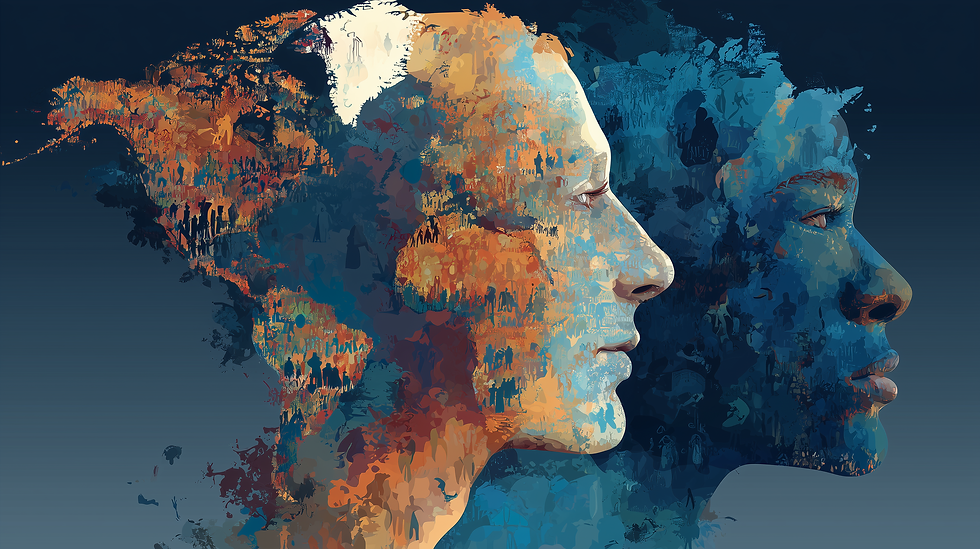
Global Migration Today: When Languages Don’t Meet
Consider the following scenario: an Egyptian doctor begins a medical residency in Germany. You speak Arabic; however your patients speak German. Your colleagues come from across the globe—India, Brazil, Turkey, Poland—each bringing a different native language into the same professional environment.
In such an environment, what enables communication?
English.
Not because it is the most elegant language, nor the most intuitive.
But because it has become the one language most people have, at some point, been required to learn—at school, in the workplace, to access online knowledge, or to compete in an increasingly global job market.
This pattern repeats itself across the infrastructure of globalisation: in international airports, multinational corporations, NGOs, refugee camps, startup ecosystems, and global conferences.
In a world shaped by migration and constant cross-border interaction, English has become the shared language that underpins global communication.
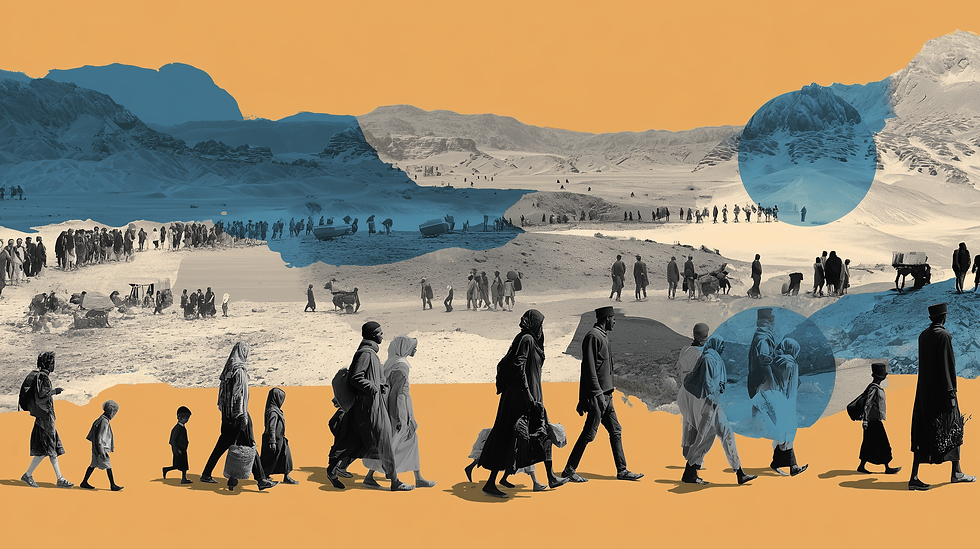
Is Brazil Becoming a Global Crossroads for Migration?
Brazil has long been a destination for immigrants—Italians, Germans, Japanese, Syrians, Lebanese, among others. But in recent years, a new wave of migration has been quietly taking shape—one that has largely gone unnoticed.
According to official Brazilian data, the country has been receiving a growing and increasingly diverse flow of migrants—driven by opportunity, necessity, and everything in between.
The result? Brazil has become a crossroads of languages and cultures.
Which language, then, connects these immigrants—many of whom arrive without speaking Portuguese?
English: the closest thing to a common denominator.
The internet has accelerated everything—and English has come to dominate.
While migration has long posed linguistic challenges, the internet has multiplied them a thousandfold.
Today, a large share of the world’s population is online. Billions of people are communicating, consuming content, doing business, studying, and connecting across borders.
And which language dominates this digital space? English. Once again. Between 49% and 55% of the world’s websites are in English.
In practical terms, this means that anyone seeking knowledge online—courses, research, podcasts, academic articles, documentaries—will inevitably encounter English.
The internet has not only globalised communication; it has also accelerated the spread of English as a global language.

Are other languages disappearing?
We are not advocating for a monolingual world. But the reality is that native languages are disappearing—fast.
According to UNESCO, around half of the world’s 7,000 languages could disappear by the end of this century. This is not just inevitable progress—it is a profound cultural loss.
When a language dies, it takes with it:
a unique way of thinking
ancestral knowledge about plants, medicine, and ecosystems
stories, myths, music, and poetry
a way of seeing the world that will be lost forever
“Language is the blood of the soul into which thoughts run and out of which they grow.”
Oliver Wendell Holmes
So no—English should not, and cannot, replace other languages. The goal is conscious multilingualism.
You hold on to your mother tongue and preserve your cultural identity. But you also learn English—because it is what connects you to the rest of the world.
Is English truly neutral? Not quite.
It carries the legacy of British colonialism, American power, and cultural dominance. When you speak English, you are—whether you like it or not—navigating a system shaped by those forces.
But here’s the reality: we don’t live in an ideal world. We live in a world where:
around 1.5 billion people already speak English
many multinational companies have adopted English as their main corporate language
Until a universal translator—à la Star Trek—becomes reality, English remains the most effective tool we have to connect people, facilitate migration, enable professional mobility, and expand access to knowledge.
It’s far from perfect. But it remains the most effective option available.
"Language is the map of a culture. It tells you where its people come from and where they are going.”
Rita Mae Brown

What is TRIBES’ approach?
This is precisely where TRIBES comes in.
We teach English and Portuguese for international learners because language is what allows people to navigate a globalised world—whether that means working in multinational companies, studying abroad, welcoming international professionals in Brazil, or simply broadening their perspective.
But language, on its own, is never enough. We also focus on cultural awareness. Because speaking a language without understanding the cultural nuances behind it is like having a map without a compass.
It has to work both ways.
At its core, language is not just a tool for communication—it is a bridge between people. And in a world where more than 304 million people are living far from home, those bridges are more essential than ever.
Why has English become the Esperanto of the 21st century?
Zamenhof once dreamed of a universal language—created from scratch, neutral, and peaceful. It never took off.
Instead, the world gradually converged on English—out of necessity, pragmatism, and power.
And as millions of people continue to cross borders, as cultures meet and blend, and as the world becomes both more connected and more complex, English remains the closest thing we have to a working global language (Esperanto).
The difference is that now, for the first time in history, it is something you can actually learn.
Languages connect us. Yet in a world that is constantly pulling people apart, every bridge matters.

If this topic resonated with you, “Global Migration and Language Barriers: Why Has English Become the Esperanto of the 21st Century?” and you connect with TRIBES’ approach to teaching, we’d love to hear from you.


Comments